[TL;DR]
Success on Product Hunt in 2026 is built on long-term community citizenship rather than a single day of hype.
- Lead with Value: Provide detailed, constructive feedback on other makers' launches at least 30 days before your own.
- Build in Public: Share the evolution of your product, including the technical challenges and pivots, to create an authentic connection.
- Network Across Platforms: Engage with relevant niches on Indie Hackers, X, and specialized Slack groups to build a foundation of supporters.
- Authenticity Wins: Avoid AI-generated comments and "voter rings"; focus on being a reliable, helpful resident of the PH ecosystem.
Product Hunt has evolved from a simple launch platform into a complex professional ecosystem. In 2026, a successful presence on the platform is determined by consistent participation and long-term credibility rather than isolated promotional efforts. To achieve a top ranking and genuine user interest, makers must establish a presence weeks or even months before their product goes live.
This article provides a strategic framework for developing a professional network and reputation within the Product Hunt community, transitioning from a new participant to an established contributor.
The Reputation Economy: Why "Trust Equity" is the New Upvote
For years, "Launch Day Checklists" dominated the conversation. But the PH community is smarter now. Users and moderators can smell "engagement farming" from a mile away.
Building a reputation on Product Hunt is about Predictability. When a respected maker launches, the community supports them not just because the product is good, but because the maker has already "deposited" value into the community through feedback, curation, and support for others.
To succeed, you must adopt what community leader Manas Sharma calls the "Community-First" approach. Instead of asking "Who will upvote me?", ask "Whose product can I genuinely help improve today?" This shift in mindset transforms your networking from transactional to relational.
Phase 1: The Foundation (The 30-Day Pre-Launch Ritual)
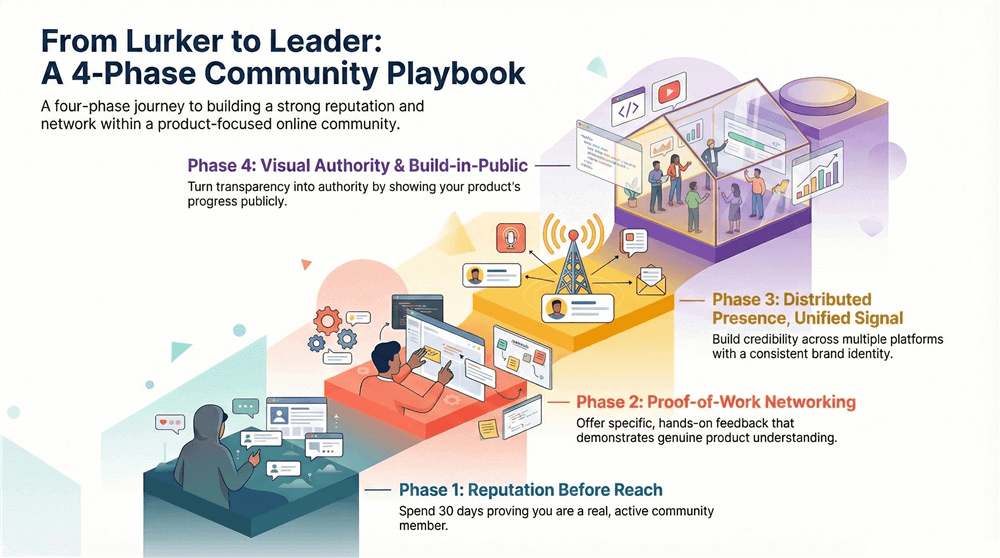
Search results and community discussions consistently highlight one major mistake: launching on a fresh account. A "Bronze Badge" or a low-activity profile tells the community and the algorithm that you are only here for the traffic.
Before you even think about your own launch, spend 30 days as an Active Resident:
- Verify Your Identity: Link your LinkedIn and X (Twitter) profiles. A "real person" with a verified bio is the first step to trust.
- Identify Your Sub-Tribes: Don't just browse the homepage. Dive into categories like SaaS, Developer Tools, or Productivity. Find where your expertise lies and stay there.
- The Daily Ritual: Spend 10 minutes every morning looking at the top 3 launches. Read the maker's comments. Understand what questions the community is asking.
One of the most underutilized tools for building reputation is Collections. Create curated lists of tools that solve specific problems (e.g., "The Best Visual Marketing Stack for 2026"). When you add a fellow maker's product to your collection, they receive a notification. It’s a subtle, high-value way to say, "I see you, and I value your work."
Phase 2: High-Value Networking (The "Give Before You Get" Strategy)
Networking on PH isn't about sending DMs; it's about Public Proof of Work. The best way to get noticed by top hunters and makers is to provide feedback that actually helps them.
The PH forums are currently flooded with AI-generated "Nice product!" comments. These are now being flagged and hidden by moderators. To stand out, your participation must be Technical and Specific.
The Visual Feedback Tactic: Instead of writing a generic text comment, use a tool like Poindeo to record a 30-second "Micro-Demo" of you using their product.
Step 1: Highlight a specific UI element you loved.
Step 2: Use Poindeo's zoom and focus effects to point out a potential bug or a feature improvement.
Step 3: Post the video link (or a GIF) in the comments.
This demonstrates that you didn't just upvote—you engaged. For a maker, a 30-second video of a user actually interacting with their product is more valuable than 100 blind upvotes.
Phase 3: The Multi-Platform Multiplier
As Manas Sharma pointed out in his community-building checklist, your reputation shouldn't live in a silo. The "PH Community" is an amorphous group that exists across multiple platforms. To build a network, you must meet them where they are.
The Worthy Platforms Checklist
To build a reputation that converts into a successful launch, engage in these "feeder" communities:
Indie Hackers: The place for deep-dive technical discussions and revenue transparency.
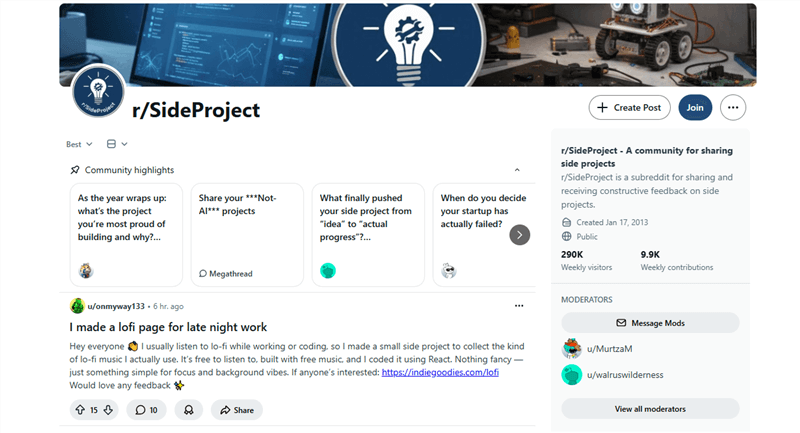
Reddit (r/SaaS, r/SideProject): Great for "brutal" feedback that polishes your product before the "nicer" PH crowd sees it.
Hacker News: High-risk, high-reward. Only post here if your technical foundation is rock solid.
Specialized Directories: Platforms like BetaList, StartupStash, and SaaSHub help build long-tail search visibility that signals your product has real staying power.
Maintain a consistent visual identity. If you use high-fidelity, focused video demos on X, use that same "Visual Language" on PH. Consistency builds recognition. When people see a product demo, they should associate it with your brand's commitment to quality.
Phase 4: Visual Authority & "Build in Public"
In 2026, transparency is a core reputation requirement. The Building in Public (BIP) movement has shifted from a trend to a standard of professional accountability, where sharing the development journey is as important as the final product.
Move beyond posting wins by documenting your "Work in Progress" (WIP). Record pivots and technical milestones to show how community feedback shapes your product.
To build true visual authority, you need tools that translate technical complexity into engaging content. Poindeo is a specialized video editor designed for software makers and founders to create high-impact product demos and "build in public" updates. It uses AI to simplify professional post-production, ensuring your product looks polished with minimal effort.
How to Highlight UI Changes and Code in Poindeo
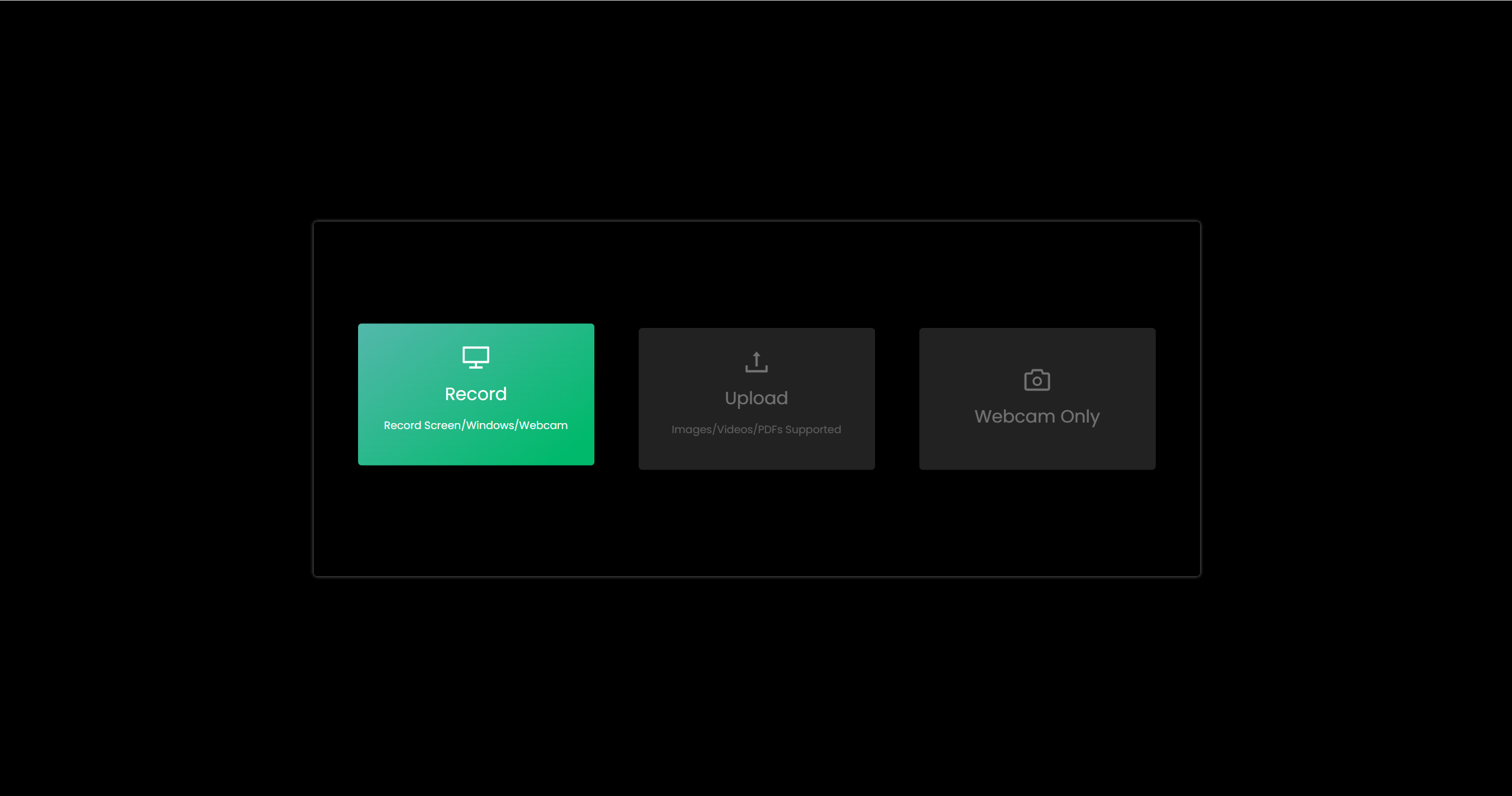
Step 1. Record or Upload: Experience ultimate convenience by using the new Poindeo browser extension to record; it automatically generates smart zoom effects to highlight your actions. Of course, you can still upload your own recordings manually.
Step 2. Smart & Manual Zoom: Poindeo automatically generates zoom effects for you, but you can also manually place zoom points on the timeline to focus on specific buttons, menus, or code.
Step 2. Add Manual Zoom: Place zoom points on your timeline to focus on specific buttons, menus, or lines of code. This eliminates the "distant" feel of full-screen captures and keeps the viewer engaged.
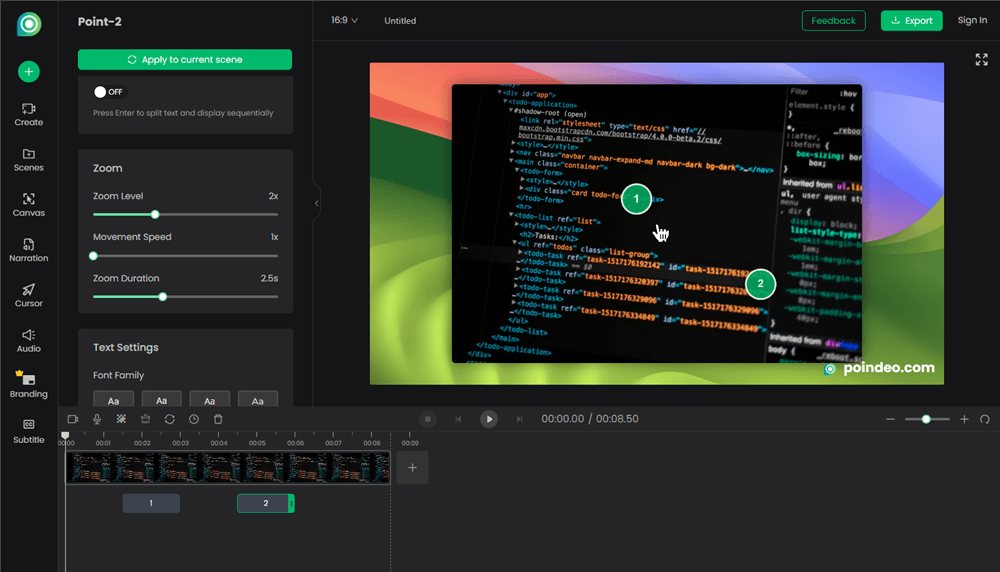
Step 3. Refine Focus Zones: Highlight specific changes by dragging a focus box over the area you want to emphasize. Poindeo dims the rest of the screen, creating a spotlight effect that makes your update stand out.
Step 4. Adjust Timing: Use the timeline to control the speed and smoothness of your zooms, creating either a snappy technical walkthrough or a cinematic teaser.
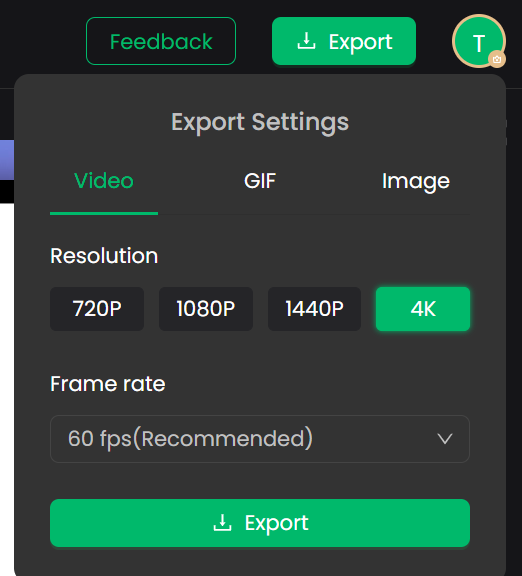
Step 5. Export in 4K: Export your final video in high fidelity to ensure that fine text and UI details remain crisp and legible for your audience.
Avoiding the "Reputation Killers" (The 2026 Red Flags)
Building a reputation takes months; losing it takes minutes. Avoid these common pitfalls that trigger the PH "Spam" filters and alienate the community:
- The "Voter Ring" Trap: Joining Discord or Telegram groups solely for "Upvote for Upvote" (U4U) is the fastest way to get your account shadowbanned. PH tracks IP addresses, browser fingerprints, and account history.
- AI-Generated Slop: Avoid using LLMs to write your "Maker Comment" or forum responses. The community values the "Human-in-the-loop." If it sounds like a robot wrote it, it will be ignored.
- Ghosting After Launch: If you launch and don't reply to every single comment within the first 4 hours, your reputation takes a hit. The "Product of the Day" title is won in the comment section, not the upvote count.
The 24-Hour Launch Day: Executing with Your Network
If you have spent the last 60 days building your reputation, launch day is simply a victory lap.
Step 1. Strategic Outreach: Send personalized notes to members you have supported in the past, inviting their expert feedback on your live product rather than just asking for a vote.
Step 2. Hunter Recognition: Actively engage with any hunters who support your launch by acknowledging their specific contributions to the ecosystem.
Step 3. Live Engagement: Maintain momentum by sharing real-time updates and short videos to address community questions and celebrate milestones as they occur.
Conclusion
Networking within the PH community isn't about "gaming" the system. It's about becoming a valuable node in a network of makers, hunters, and enthusiasts.
By utilizing Visual Proof (high-fidelity demos), Strategic Curation, and Multi-platform Engagement, you build a reputation that outlasts any single launch cycle. Your goal is to be the person the community wants to see succeed.
Your reputation is what people say about your product when you aren't in the discussion thread. Start building those conversations today.
Ready to build your visual reputation?
Visibility is the currency of the Product Hunt community. Don’t just describe your product—show it with the clarity it deserves. Try Poindeo for free and start creating the high-impact product demos that turn casual browsers into lifelong ambassadors.
Frequently Asked Questions
How long does it take to build a good reputation on Product Hunt?
While there is no "magic number," the community generally trusts accounts that have been active for at least 30 to 60 days. This includes daily logins, upvoting relevant products, and contributing meaningful comments. Rapidly "warming up" an account 48 hours before a launch is often flagged by PH's spam filters.
Can I build a reputation without having a product ready yet?
Yes! In fact, the most successful "Build in Public" (BIP) makers start their networking during the ideation phase. By sharing early wireframes or recording "Work in Progress" clips with Poindeo, you invite the community to provide feedback. This creates a "founder-follower" bond long before the actual launch day.
Do I need a "Top Hunter" to launch my product?
While having a top-tier hunter (like Chris Messina or Kevin William David) can provide an initial boost, it is no longer a requirement. Product Hunt’s algorithm now weighs the quality of the "Maker’s" reputation very highly. If you have built strong trust equity yourself, hunting your own product is a perfectly valid (and often preferred) strategy.
What is the best way to get noticed by influential members of the PH community?
The most effective way is High-Value Feedback. Influential makers receive hundreds of generic "Great job" messages. If you provide a 30-second video breakdown of a specific feature you liked—or a UI improvement they could make—using a tool like Poindeo, you demonstrate a level of effort that virtually guarantees a follow-back or a profile visit.
Does the PH community care about other platforms like Indie Hackers or Reddit?
Absolutely. The PH community is highly interconnected. Most "Power Users" are also active on Indie Hackers, X (Twitter), and specialized Slack/Discord groups. Building a reputation on these "feeder" platforms provides social proof that you are a consistent contributor to the wider startup ecosystem, not just a one-time seeker of upvotes.