You have spent months—perhaps years—building the perfect online video editing tool. You’ve obsessively tweaked the timeline rendering speed, polished the UI until it gleams, and stress-tested your cloud exports. Now, you are ready for the big reveal. You are ready for Product Hunt.
But here is the harsh reality that most founders ignore until it is too late: Product Hunt is not a meritocracy. It is a game.
Statistics suggest that the vast majority of products launched on the platform fail to gain significant traction. They don't fail because the code is bad. They don't fail because the idea is weak. They fail because the founder treated the launch as a generic "publish" button rather than a calculated marketing campaign.
In this guide, we are going to dismantle the 10 critical mistakes that will kill your Product Hunt launch. We won't just list them; we will explore the algorithm dynamics behind them and provide the specific "Fix" you need to secure your spot in the Top 5.
The "Cold Start" Phase: Pre-Launch Failures
The seeds of a failed launch are usually sown weeks before the actual day. If you wait until launch morning to start marketing, you have already lost.
Mistake #1: The "Cold Start" Launch (No Warm Audience)
The single most common reason launches flop is the belief that Product Hunt will provide your initial traffic. Founders often think, "I’ll post it, and the community will find it."
This stems from a misunderstanding of the "Wisdom of Crowds." Founders believe that quality naturally rises to the top. While true over a long period, Product Hunt is a daily cycle. It moves too fast for organic discovery to work alone.
Why It Kills You:
The Product Hunt algorithm is heavily weighted toward velocity, specifically in the first four hours of the day (12:01 AM – 4:00 AM PST).
If you launch to crickets, you stay at the bottom of the page. Because you are at the bottom, nobody sees you. Because nobody sees you, nobody upvotes you. It is a vicious cycle. To crack the top section of the homepage—where 90% of the traffic comes from—you need a surge of activity the moment you go live.
The Fix: The "Launch Squad"
You need to build a pre-launch waiting list.
- Create a "Coming Soon" page: Use Product Hunt's "Ship" tool or a simple landing page to collect emails 4 weeks out.
- Build a "Launch Squad": Identify 50–100 friends, colleagues, or beta users who act as your "First Response Team."
- The Golden Hour Protocol: Instruct this group that their support matters most between 12:01 AM and 2:00 AM PST. Do not ask them to spam; ask them to genuinely engage with the launch as soon as it goes live to trigger the algorithm’s velocity flags.
Mistake #2: The "Solo" Ego Trip (Ignoring Hunters)
You decide to hunt your product yourself using a fresh account with zero followers, assuming the product’s quality alone will drive discovery.
Why It Kills You: While self-hunting is allowed, it’s risky for new accounts. When an established "Top Hunter" posts your product, a notification is sent to their thousands of followers. If you hunt it yourself with zero followers, zero notifications go out. You lose that initial "signal flare" and become entirely dependent on organic homepage traffic, making you nearly invisible in the critical first hour.
The Fix: Strategic Hunter Outreach
- Research: Use tools like Upvote Bell or simply browse past successful launches in the Video/SaaS space to see who hunted them.
- The "Ask": Reach out 2–3 weeks in advance. Do not be spammy.
- The Offer: "Hi [Name], I’ve built a browser-based editor that handles 4K exports without lag. I know you love creative tools, so I’d love to give you exclusive beta access. If you like it, I’d be honored if you hunted us next Tuesday."
- Backup Plan: If you can't find a top hunter, self-hunting is better than a bad hunter. But try for the network effect first.
Mistake #3: The "Static" Death (Boring Visuals)
You upload a static logo as your thumbnail and a few high-res screenshots of your UI for the gallery.
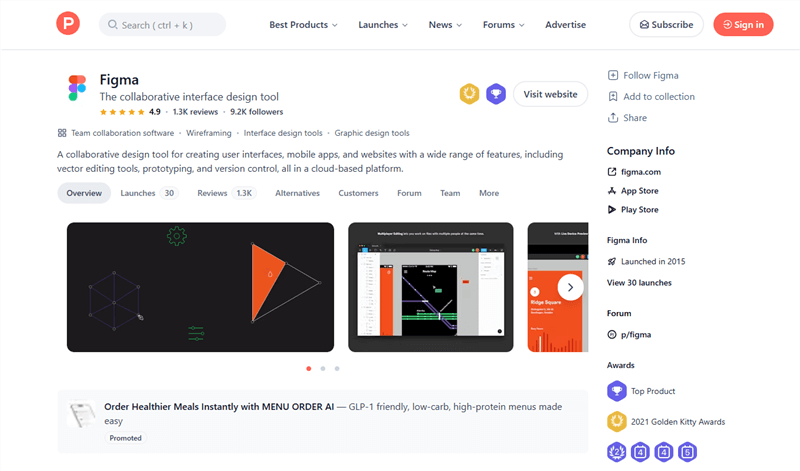
You are treating Product Hunt like the App Store. In the App Store, static icons are the norm. But Product Hunt is a social feed, more akin to Instagram or Twitter than a software repository.
Your product is designed to solve problems, create value, and drive meaningful change. When you use a dull, static square as your thumbnail, you are subconsciously signaling to potential users that your product is just as stagnant and lifeless. Product Hunt allows for GIF thumbnails for a reason: in a vast sea of static imagery, motion triggers the primal part of the human brain wired to detect movement. By failing to leverage dynamic visuals, your product effectively disappears into the background noise. On a highly competitive platform, being invisible is equivalent to being non-existent.
The Fix: The "Scroll-Stopper" with Poindeo
- The Thumbnail: Use Poindeo to create a high-impact GIF (must be under 3MB) that loops a key value proposition or core interaction. Whether it is a seamless workflow or a unique feature, the visual needs to be high-contrast and crystal clear even at small sizes to grab immediate attention.
- The Gallery: Do not just use screenshots. Use captioned GIFs in your gallery carousel showing specific features in action (e.g., "One-click background removal").
- Brand Consistency: Ensure the color palette of your thumbnails matches your landing page to create a seamless brand experience.
Launch Day Execution: The Algorithmic Traps
The clock strikes midnight. You are live. This is where the technical execution errors happen—mistakes that trigger the platform's spam filters or ruin your momentum.
Mistake #4: The "Loom" Laziness (Low-Effort Demo)
For your launch video, you record a quick, unscripted screen share using Loom. The audio is echoey, you stumble over your words, and the mouse movement is jittery. You tell yourself, "The product is in beta; people will forgive a rough video." This is the MVP (Minimum Viable Product) mindset gone wrong. MVP applies to code functionality, not to the marketing assets that represent your brand.
This is a critical blow to your professional credibility. While you might think the content is all that matters, your presentation is a direct reflection of the quality of your product. If your launch assets feel unpolished, unorganized, or low-effort, the user’s immediate thought is: "If they didn't care enough to polish their first impression, how much care did they really put into the product itself?" In a world of infinite options, you lose all authority and trust in the first 10 seconds.
The Fix: High-Fidelity Demonstration
Do not wing it. Script your demo video, use a decent microphone, and ensure every frame serves a purpose. High production value signals a high-quality product.
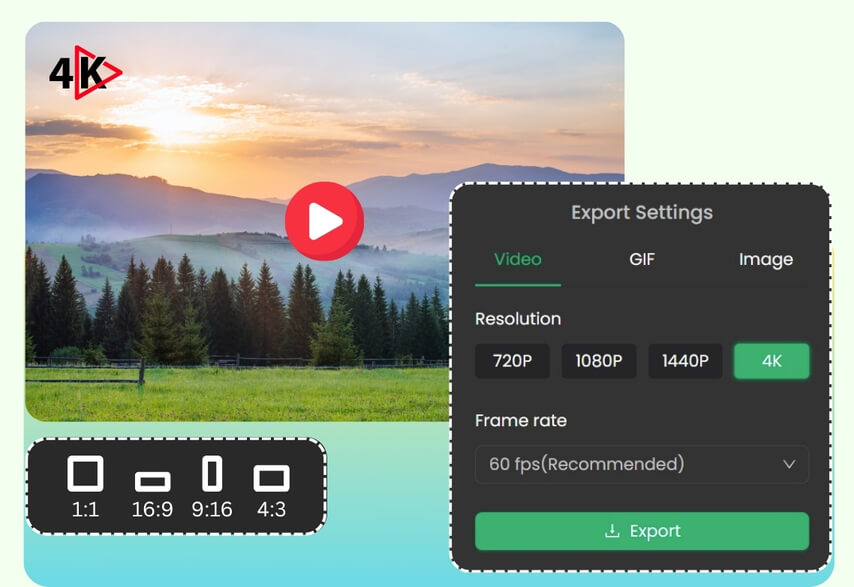
Use Poindeo to ensure your demo is sleek, professional, and visually engaging. Poindeo is a browser-based video creation tool that turns static assets—such as images, screenshots, and PDFs—and simple screen recordings into dynamic, professional-looking videos without the steep learning curve of traditional video editors.
By leveraging Poindeo’s dual-stream recording, you can capture your screen and your camera simultaneously, adding a human face to the technology and building immediate trust with your audience. Use the dynamic zoom feature to automatically or manually spotlight key UI elements, ensuring users don't get lost in a cluttered screen.
Keep it Snappy: Aim for 45–60 seconds. You must hook the audience within the first 5 seconds, or they will scroll past.
Mistake #5: The "Direct Link" Penalty (Accidental Spam)
You send an email to your newsletter and post on LinkedIn saying: "We are live! Please vote for us here: producthunt.com/posts/your-tool-name."
You want to make it as easy as possible for people to vote. You think reducing clicks increases conversion.
The Product Hunt algorithm is smart. It fights voting rings and bots by analyzing "referrer" data. If the algorithm sees that 100% of your votes are coming from direct external links, and those users are bouncing immediately after voting, it flags your product.
It assumes you are buying votes or forcing people to vote. This can result in a "ghosting" penalty where your vote count drops or you are removed from the trending list.
The Fix: The "Search and Find" Method
Instead of a direct link, guide users to find you organically. This mimics natural interest.
- The Link: Send users to the Product Hunt homepage or your specific "Maker" profile page.
- The Instruction: "We just launched! Go to Product Hunt and search for [Product Name] to see our launch."
- The Benefit: This signals to the algorithm that users are actively searching for your brand, which acts as a powerful multiplier for ranking.
Mistake #6: The "Midnight" Trap (Timing Errors)
You launch at 9:00 AM because that is when you get to the office. Or, you launch at 12:00 AM your local time (London/Berlin/Tokyo), forgetting about Pacific Standard Time.
Founders often prioritize their own sleep schedule or work hours over the platform's rhythm.
Product Hunt operates on a strict 24-hour cycle that resets at 12:01 AM PST.
- Launching Early (e.g., 11:00 PM PST): Your product appears on "yesterday's" board for one hour, gets buried, and then disappears when the new day starts. You lose your entire launch.
- Launching Late (e.g., 9:00 AM PST): You have missed 9 hours of voting. Your competitors have been accumulating votes since midnight. Even if you get velocity now, the gap is mathematically impossible to close.
The Fix: Scheduled Precision
- The Time: Schedule your launch for 12:01 AM PST.
- The Tool: Use Product Hunt’s built-in scheduling feature. Do not rely on waking up to press the button manually.
- The Plan: If 12:01 AM PST is 3:00 AM for you, you have two choices: wake up and work, or have a team member in a different time zone handle the initial comments. (Pro tip: Wake up. It’s one night.)
Mistake #7: Ghosting the Comments (Engagement Failure)
You post the product, reply to the first three comments, and then go to lunch or back to coding.
"I've built the thing; now the users just need to upvote it." Founders often underestimate the "community" aspect of the platform.
The ranking algorithm does not just count upvotes; it counts engagement. A product with 500 votes and 0 comments looks like a bot operation. A product with 300 votes and 150 comments looks like a viral sensation.
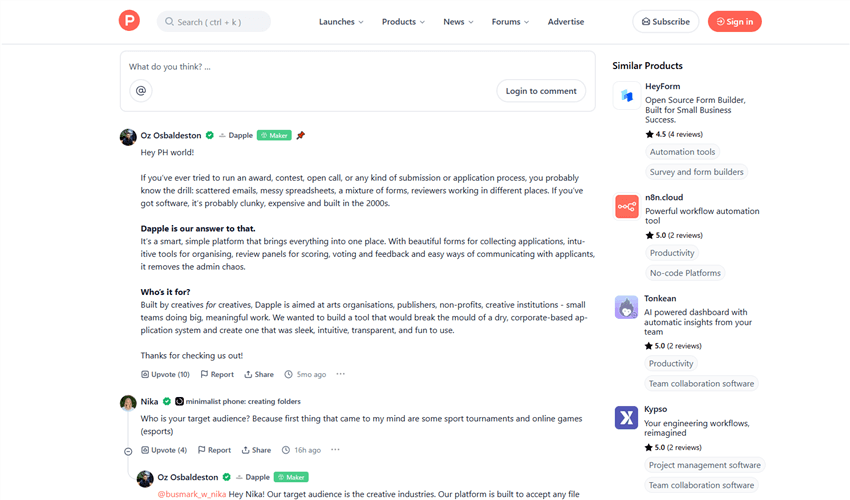
Additionally, users on Product Hunt are skeptical. They will ask technical questions about your video rendering codecs, privacy, or roadmap. If these questions go unanswered for hours, trust plummets.
The Fix: The "AMA" Mindset
- Clear the Schedule: Your only job for 24 hours is to refresh the comments section.
- The "Maker's Comment": This is the first comment on the post, written by you. It shouldn't just be marketing copy. It should be a personal story: "Hi Hunters! I’m [Name]. I built this because I was tired of Premiere Pro crashing..."
- Reply with Questions: Don't just say "Thanks!" Say, "Thanks [User]! I see you do motion graphics—do you think our easing functions would fit your workflow?" This encourages a reply, doubling the comment count.
Product & Offer Strategy: The Conversion Killers
You have mastered the algorithm, but now you are failing the human test. People are clicking, but they aren't trying the product.
Mistake #8: The "Paywall" Friction
A user clicks through to your site, excited to edit a video. They upload a file, make some cuts, and hit "Export." Suddenly, a pop-up appears: "Enter Credit Card to Export," or "Sign up for a 7-day trial (Credit Card Required)."
You want to validate revenue. You want qualified leads, not freeloaders.
Product Hunt users are explorers, not necessarily buyers (yet). They test dozens of tools a week. They have "subscription fatigue." If you force a credit card before they have experienced the "Aha!" moment, they will bounce immediately.
High bounce rates send negative signals back to Product Hunt (if you have the PH badge installed), and more importantly, those users will not go back to upvote your product.
The Fix: The "Product Hunt Special"
Reduce friction to zero.
- The Offer: Create a dedicated landing page or a dynamic banner for PH visitors.
- The Deal: "Welcome Hunters! No login required for your first 3 exports." OR "Use code HUNT20 for 3 months free."
- The Logic: Let them play. Once they see your video editor renders faster than their current tool, then ask for the sale.
Mistake #9: Feature-Dumping Copy
Your tagline reads: "A non-linear, cloud-based, WebGL-accelerated timeline editor with H.264 support."
You are an engineer. You are proud of the tech stack. You think the specs are the selling point.
Hunters scan the page at lightning speed. They don't buy specs; they buy superpowers. Technical jargon creates cognitive load. If they have to think to understand what you do, they scroll past.
The Fix: Benefit-Driven Copy
Focus on the result, not the mechanism.
- Bad: "Cloud-based video collaboration platform."
- Good: "Edit videos with your team in real-time. Like Google Docs for video."
- Bad: "AI-driven silence removal algorithm."
- Good: "Remove awkward silences from your podcast in one click."
Mistake #10: The "One-Day" Mindset (No Post-Launch Plan)
The clock strikes midnight again. The launch is over. You finished #4. You celebrate, go to sleep, and wake up thinking the work is done.
Founders view the launch as a finish line. In reality, it is the starting gun.
The real value of Product Hunt often comes after launch day.
- The Newsletter: If you rank high, you get featured in the daily email digest sent to millions of subscribers the next day.
- The "Long Tail": Product Hunt has a high domain authority. Your PH page will likely rank #1 on Google for your brand name for months.
- The Missed Connections: Many investors and journalists browse the "top products" archives days later.
The Fix: The "Day 2" Protocol
- Update the Community: Post a comment thanking everyone and sharing stats (e.g., "We processed 5,000 videos yesterday!").
- Social Proof: Take a screenshot of your ranking and blast it on LinkedIn, Twitter, and your email list. "We were #3 Product of the Day!" is a badge of honor that increases conversion rates on your site for years.
- Follow Up: Reach out to the people who left thoughtful comments. These are your future power users.
Conclusion
Launching on Product Hunt can change your startup's trajectory overnight—but only if you prioritize strategy over luck. The difference between a flop and a "Golden Kitty" winner isn't just the code; it’s the execution.
Avoid the "Cold Start," respect the power of "Velocity," and use Poindeo to ensure your visual assets are as polished as your product. Engage with every commenter and treat your launch as the birth of a business, not just a release of code.
Don't guess your way to the top. Review your assets, master your presentation, and go win. Happy hunting.
Frequently Asked Questions (FAQ)
Q: Does the day of the week matter?
A: Yes. Tuesday, Wednesday, and Thursday are the most competitive days with the highest traffic. If you want maximum traffic, launch then. If you want an easier path to "#1 Product of the Day" (but with less traffic), launch on the weekend.
Q: Should I use a "Hunter" or hunt it myself?
A: If you are new, get a Hunter. Their followers provide the initial push. If you have a large audience (10k+ Twitter followers), hunting it yourself is fine.
Q: Can I buy upvotes?
A: Absolutely not. Product Hunt's fraud detection is sophisticated. Buying votes will get your domain permanently blacklisted. It is the fastest way to kill your company's reputation.