It is the most common question in early-stage founder communities, from IndieHackers to Reddit’s r/SaaS: "Should I launch on Product Hunt to get the hype, or on BetaList to get my first users?" If you're asking this question, you're already going about your launch incorrectly.
Product Hunt and BetaList are not competitors but consecutive stages in a stacked launch strategy. Use BetaList to validate and build a waitlist, and then use Product Hunt months later for a "Grand Opening" to scale.
This guide will not just compare Product Hunt vs. BetaList features. It will give you the exact 90-day roadmap to leverage both. We will analyze the traffic quality, the organic visibility benefit, and crucially, the visual assets you need to win on both platforms—and how tools like Poindeo can help you build them without hiring a video agency.
You can now use Poindeo's whiteboard recorder to turn simple sketches or any ideas into professional demos, tutorials or explainer videos, without any installation.
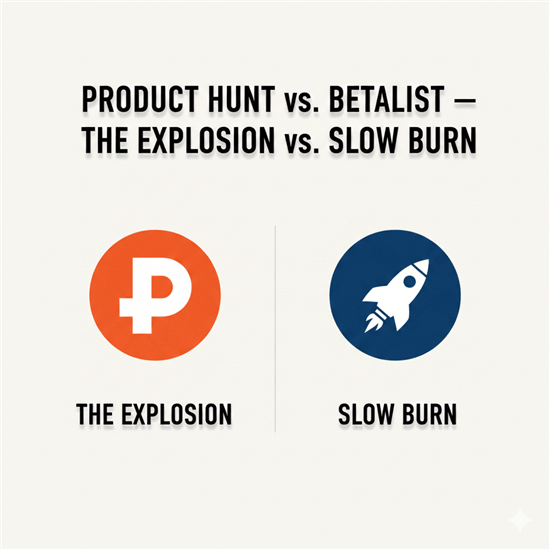
Product Hunt vs. BetaList Core Difference
To understand why you need both, you must first understand the fundamental difference in "traffic physics" between the two platforms. They attract different people with different intents.
BetaList: The Incubator (The "Slow Burn")
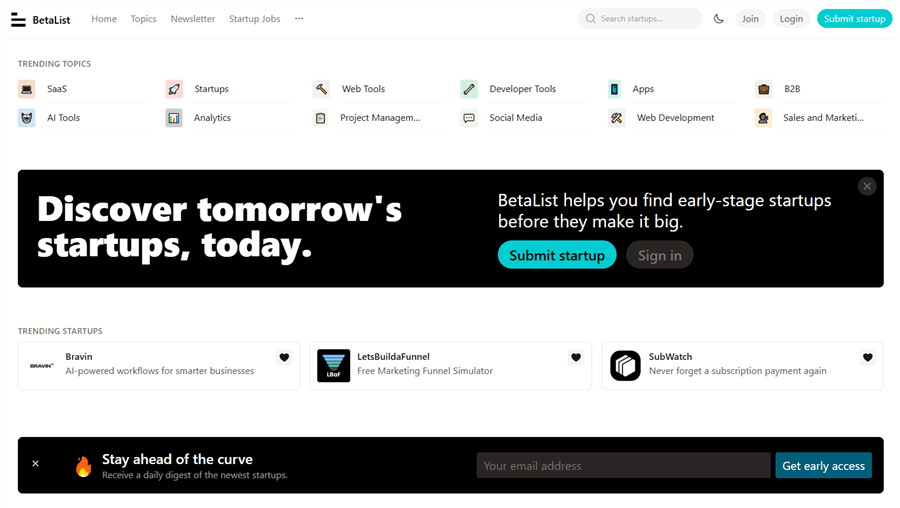
BetaList is a platform for showcasing and discovering new startups and products that are in their testing (Beta) phase and have not yet officially launched. Its core purpose is to help founders gather feedback from early users and tech enthusiasts before their product is released to the public.
It is designed for products that are not quite ready. It is the home of the early adopter—the tech enthusiast who wants to see what is coming next before the rest of the world knows about it.
- The Traffic Pattern: BetaList traffic is a "slow drip." When you are featured, you won't see 10,000 visitors in an hour. You might see 50–100 visitors a day for a few weeks.
- The User Intent: High Feedback / Low Patience. These users know they are testing beta software. They are more forgiving of bugs but demanding of innovation. They are there to sign up for a waitlist or try an MVP (Minimum Viable Product).
- The 2025 Stats: With monthly visits hovering between 100k–200k, BetaList is a niche. However, the conversion rate from visitor to email subscriber is notoriously high—often hovering around 15-25% for compelling landing pages.
- BetaList provides a “DoFollow” backlink. While its Domain Authority (DA) is lower than Product Hunt’s, the link is often permanent and categorized, providing a healthy, long-term search authority signal to Google that your site is a legitimate software entity.
Product Hunt: The Main Stage (The "Explosion")

Product Hunt is a community platform where users share, discover, and discuss the latest tech products, apps, games, and books. It serves as a major stage for product launches, allowing products to gain massive exposure and community attention within a single day. Product Hunt is the Super Bowl of the startup world. It is where you go when you are ready to show off.
- The Traffic Pattern: Violent and fleeting. If you hit the "Top 5" on the leaderboard, you can expect 3,000 to 10,000+ unique visitors in a 24-hour window. However, 48 hours later, that traffic can drop to near zero.
- The User Intent: High Hype / Zero Patience. Product Hunt users are not there to beta test. They are there to judge. If your signup link is broken, your UI is confusing, or your demo video doesn't load, they will downvote (or ignore) and move on.
- The 2025 Stats: Product Hunt pulls in over 3.3 million monthly visits. The audience is global, with significant density in the US, India, and Europe. It is also heavily watched by journalists, VCs, and angel investors.
- The Organic Ranking Value: A backlink from Product Hunt is gold. It has an incredibly high Domain Rating (DR 90+). Furthermore, Product Hunt pages rank very well on Google. If someone searches "Your App Name review," your Product Hunt page will likely appear in the top 3 results forever.
The Verdict: BetaList is for Product Validation. Product Hunt is for Product Marketing. You cannot market a product you haven't validated.
Product Hunt vs. BetaList: Detailed Feature Comparison
To help you plan your budget and resources, here is the granular breakdown of the two platforms.
| Feature | BetaList | Product Hunt | Winner for Startups? |
| Primary Goal |
Beta Testers & Feedback |
Viral Traffic & Sales |
Tie (Depends on Stage) |
| Traffic Duration | Long-tail (Weeks/Months) |
Short-tail (24-48 Hours) |
BetaList for consistency |
| Traffic Volume | Low (50-200/day) | High (1,000+/day spike) | Product Hunt for scale |
| Cost | Free (Waitlist) or ~$299 (Skip) | Free (Optional "Ship" sub) | Product Hunt (Free tier is faster) |
| Domain Authority |
High (DR ~70) |
Massive (DR ~90+) | Product Hunt |
| Acceptance Criteria | Strict (Must be unreleased/beta) | Open (Algorithmic ranking) | Product Hunt is easier to enter |
| Asset Requirements | 1 Landing Page + Screenshots | Video + Gallery + Tagline |
BetaList is easier to prep |
| Best For | Finding Bugs | Finding Customers |
The "Stacked Launch" Timeline (90-Day Roadmap)
Do not launch on both days. Do not launch on Product Hunt first. Follow this sequential timeline to maximize your results.
Phase 1. BetaList Strategy: Validation Phase (Days 1–30)
Your goal here is not revenue; it is data. You need to find the "showstopper" bugs that will embarrass you later.
Step 1. Prepare Your Asset and Submission
You need a simple landing page. It doesn't need to be perfect, but it must have a clear value proposition and an email capture form. Submit to BetaList.
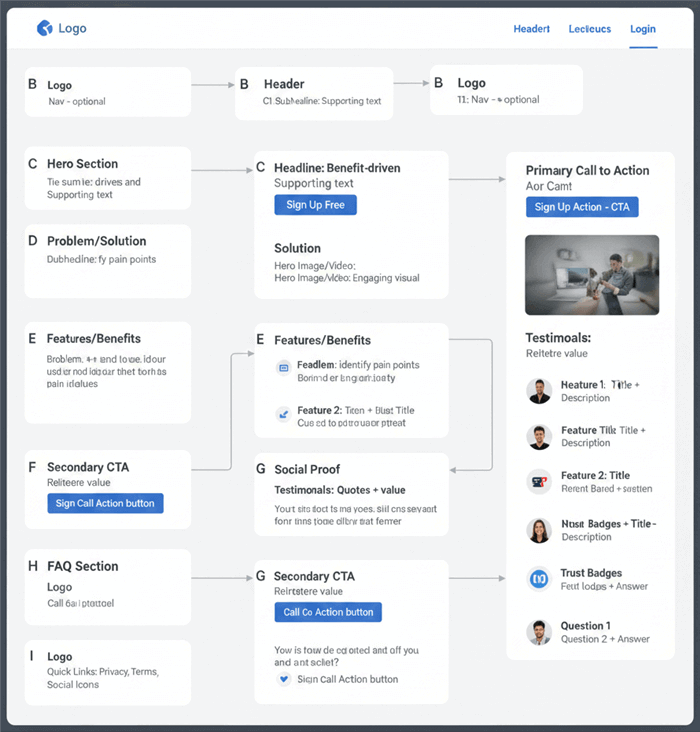
Note: The free queue on BetaList can take 4–8 weeks. If you are in a rush, their paid "Skip the Line" fee (around $299) is often worth it to align with your schedule.
Step 2. Achieve the Goal and Take Action
Target 300–500 Email Signups from the BetaList feature. Onboard these users manually. Talk to them. Ask them what confused them about your UI.
Phase 2. The Refinement (Days 31–60) — Target: Polish
The Refinement Phase (Days 31–60) focuses on polishing the product using early user feedback. Immediately "fix the leaks" identified during the BetaList phase: adjust the pricing page if users dropped off at the credit card screen, or improve the UX with tooltips if the dashboard was confusing.
The second core task is Gathering Social Proof. Contact the happiest BetaList users for specific, compelling testimonials —generic praise is insufficient. These high-quality quotes are critical assets for the upcoming Product Hunt launch.
Phase 3: Product Hunt Strategy: The Hard Launch (Day 90)
This is showtime. You have a stable product, a list of 500+ warm leads (from BetaList) ready to upvote you, and testimonials.
The "Hunter": In 2025, having a top "Hunter" submit your product is less critical than before, but still helpful. However, self-hunting is now perfectly acceptable and common.
The Product Hunt Launch Day Rhythm:
- 12:01 AM PST: The Product Hunt day begins. You want to be alive the second the clock turns.
- Email Your BetaList: Send a newsletter to those 500 BetaList users. Do not ask for upvotes (this is against PH rules). Ask them to "Check out the launch and join the discussion."
- The Asset Requirement: This is where most founders fail. Product Hunt is a visual medium. You cannot win with just screenshots. You need a Demo Video.
Why Video Wins Product Launches
This is the harsh reality of 2025: Static screenshots are invisible.
When a user scrolls through the Product Hunt feed, they are bombarded with dozens of new tools. They do not read lengthy descriptions; they look at the media gallery. Data from top launches confirms a clear correlation: Products featuring a high-quality, narrated demo video rank 40% higher than those relying only on static images.
However, creating a compelling "hype video" is traditionally difficult. The Old Way involved hiring an expensive agency for thousands of dollars or spending a week struggling with complex desktop software like After Effects.
How to Build a #1 Demo Video in Your Browser
This is where Poindeo disrupts the game for bootstrapped entrepreneurs. You avoid the complexities and costs associated with hiring external editors. You may create a professional "Smart Zoom-Enhanced" product demo right in your browser in minutes.
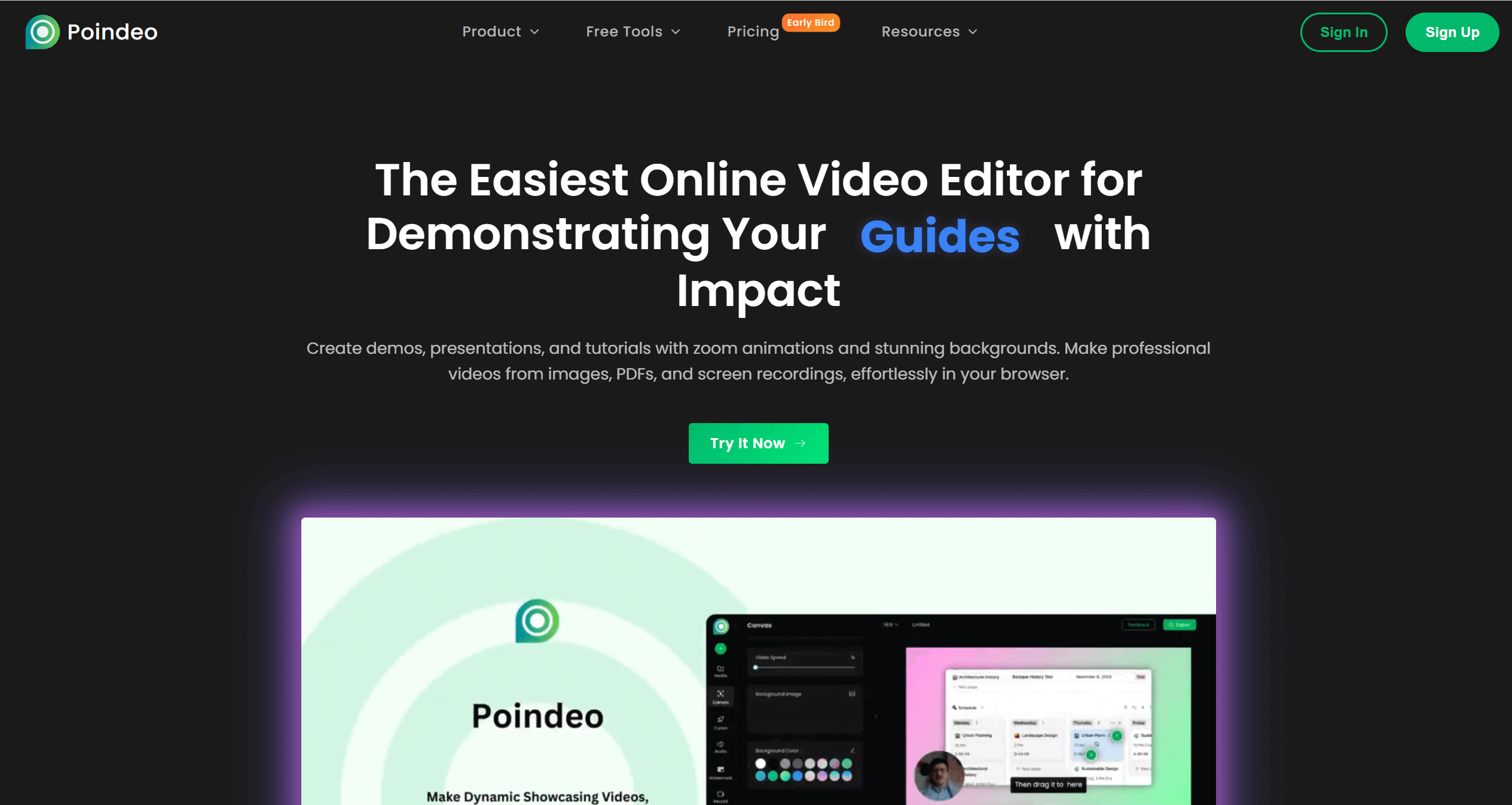
Here is the anatomy of a winning Product Hunt video, built with Poindeo:
- The Hook (0:00–0:05) — Focus on the Problem
Don't start with a logo intro. Start by hitting the user's pain point. Use your webcam to speak directly to the user.
Poindeo Feature Integration: Built-in Simultaneous Screen and Webcam Recording. This integrated recording workflow allows you to speak directly to your users, enabling the fast, consistent creation of immersive content without the need for external tools.
- The Zoom (0:05–0:30) — Guide the User's Eye
Show, don't just tell. A full screenshot of your dashboard looks like a cluttered mess on a mobile screen. The crucial strategy is to guide the user's eye directly to the feature you are highlighting.
Poindeo Feature Integration: Smart Zoom Effects (Signature Feature).
- Upload your existing video, screenshot, or PDF
- Click the exact area you want to highlight.
- Poindeo automatically applies a smooth, intuitive zoom effect.
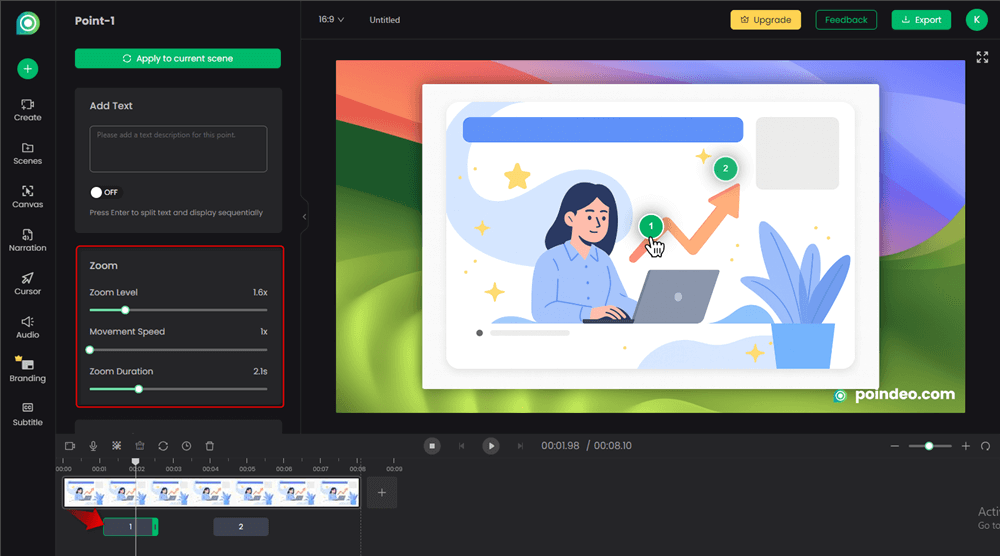
This feature ensures the viewer stays engaged and sees the core pitch, even when watching on a small iPhone screen. You can also use Text Annotations during the zoom to clarify key metrics or buttons.
- The Resolution (0:30–0:45) — Showcase the Result
Show the outcome of using your tool (e.g., a generated report, an edited video clip). The output must look premium.
Poindeo Feature Integration: High-Quality Export. Product Hunt supports high-quality media. Don't upload a blurry 720p video. Poindeo allows you to export your browser-edited video in crisp 4K resolution, ensuring your text and UI elements look professional.
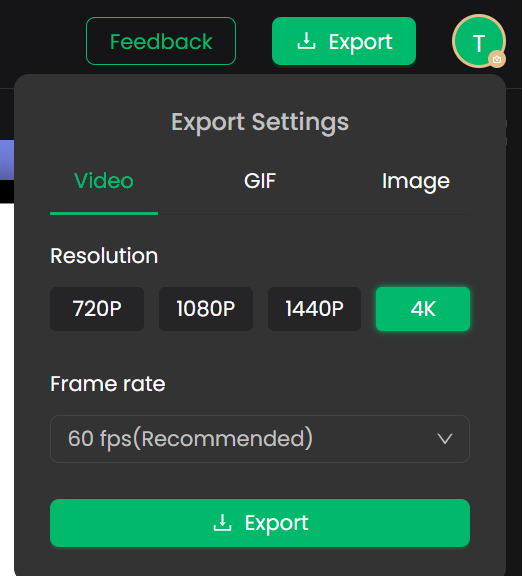
- The GIF Loop (The Thumbnail) — The Billboard
Product Hunt allows you to set a GIF as your thumbnail. This is your most important billboard to stop scrollers.
Poindeo Feature Integration: Instant GIF Export. Take the best 3-5 seconds of your demo (ideally showing a core feature in action, like the smart zoom or a result) and export it directly as a high-quality GIF from Poindeo. Use this eye-catching visual as your primary asset in the launch feed.
FAQs on BetaList vs. Product Hunt
Can I launch on BetaList after Product Hunt?
Generally, no. BetaList is strict about accepting products that are "new" and "in beta." If you have already made a splash on Product Hunt and have thousands of users, BetaList will likely reject your submission as being "too mature." This is why the BetaList → Product Hunt sequence is mandatory, not optional.
Does a "Coming Soon" page count for Product Hunt?
You can use "Product Hunt Ship" to create a teaser page, but you cannot do a main feed launch with just a "Coming Soon" page. You need a functional product that people can use immediately. BetaList, conversely, is perfect for Coming Soon pages.
My product is B2B Enterprise. Is Product Hunt worth it?
Yes, but manage your expectations. Product Hunt skews towards "Prosumer," "PLG" (Product-Led Growth), and "AI Tools." If you are selling $50,000 enterprise software that requires a sales call, you won't get many direct buys. However, the organic visibility benefit and the ability to put the "Featured on Product Hunt" badge on your footer are valuable social proof for B2B buyers.
How important is the first hour on Product Hunt?
Critical. The algorithm weighs "velocity." 10 upvotes in the first hour are worth more than 50 upvotes in the tenth hour. This is why having your BetaList email list ready to engage at 12:01 AM PST is your secret weapon.
Conclusion
The debate between Product Hunt and BetaList is a distraction; the winning strategy is mastering the timeline. First, validate on BetaList to ensure product-market fit and iterate based on early feedback. Then, Dominate on Product Hunt with a highly polished product and professional visual assets.
The biggest launch failure point in 2025 is content, not code. Founders often spend months coding brilliant features, but launch with blurry screenshots and no demo video. Don't let your hard work be ignored because you failed to sell it visually. You don't need a video editing team—you just need your browser.
Try Poindeo for Free today. Record your screen, add dynamic zoom points to highlight your best features, and export a 4K demo video that demands attention on the Product Hunt leaderboard.