If you’re a founder in 2026, you’ve probably considered launching on Product Hunt. It’s still one of the most iconic places to debut a new product—but here’s the blunt truth: it’s harder than ever to stand out. The platform is saturated, the algorithm favors high-profile launches, and many indie makers feel like their product gets buried under companies with bigger marketing budgets.
That’s why more founders are asking: “Is there a way to find new software products — especially from independent developers — without using G2 or in-your-face enterprise directories?” This concern isn’t hypothetical. As one Reddit user put it:
“I’m curious if there are other platforms like Product Hunt or better. … Is there a platform like Product Hunt that you can find new software products from independent developers? Not G2. I feel that’s more corporate solution-based services and products.”
That tension — between visibility and independence — drives many founders to look for alternatives. In this guide, we’ll explore the 10 best Product Hunt alternatives for launching SaaS, dive into how to evaluate them, show you a launch strategy, and even highlight mistakes founders commonly make. By the end, you'll know not just where to launch — but how.
You can now use Poindeo's whiteboard recorder to turn simple sketches or any ideas into professional demos, tutorials or explainer videos, without any installation.
Why Product Hunt Alone Isn’t Enough in 2026
Product Hunt’s prestige is real. But relying on it as your only launch channel is increasingly a flawed strategy, especially for bootstrapped or indie developers. Here’s why:
1. Crowded Visibility
Big startups and PR-backed launches dominate the feed, making it hard for smaller products to stand out.
2. Algorithm & Timing Sensitivity
Early upvotes and posting time heavily affect visibility. Miss the window, and your launch can fade fast.
3. Limited Beta Feedback
PH users expect polished products, not MVPs, so it’s not ideal for testing early prototypes.
4. High Launch Prep Costs
Landing pages, demo videos, and media kits take time and money — a challenge for solo founders.
5. Short-Term Traffic vs Long-Term Growth
PH drives spikes, but listings lose momentum quickly. Sustainable traffic requires evergreen directories and communities.
6. Not Ideal for Niche or Indie-First Products
Micro-SaaS, dev tools, or solo-built products often get less attention than polished, widely appealing launches.
Product Hunt is still useful — but not sufficient. A smarter launch strategy pairs PH with other platforms that cater to early adopters, niche audiences, and long-term discoverability.
Comparison Table (Platform Snapshot)
Here’s a quick comparison of the top 10 alternatives to help you visualize how they stack up:
|
Platform |
Audience Type |
Free / Paid |
Best For |
Long-Term Traffic Potential |
|
BetaList |
Early adopters, makers |
Free / Paid |
Pre-launch, MVPs |
Medium |
|
Indie Hackers |
Indie builders, bootstrappers |
Free |
Maker stories, progress updates |
Medium |
|
Hacker News (Show) |
Developers, tech-first audience |
Free |
Dev tools, open-source SaaS |
High (spike) |
|
AlternativeTo |
Software seekers |
Free |
Search Engine Visibility, comparison-based SaaS |
Very High |
|
Futurepedia |
AI tool users, early adopters |
Free / Paid |
AI SaaS |
High |
|
Firsto.co |
Indie makers, micro startups |
Free |
Indie launches |
Medium |
|
Saaspa.ge |
SaaS-focused audience |
Free |
SaaS discovery |
Medium |
|
TinyStartups |
Micro-SaaS, solo founders |
Free / Paid |
Lightweight SaaS products |
Medium |
|
Open-Launch |
Maker-first, indie products |
Free |
Community launches |
Medium |
|
OpenHunts |
Indie tools, software discovery |
Free |
Evergreen product discovery |
Medium |
The 10 Best Product Hunt Alternatives for SaaS
1. BetaList — Best for Pre-Launch & MVP Testing
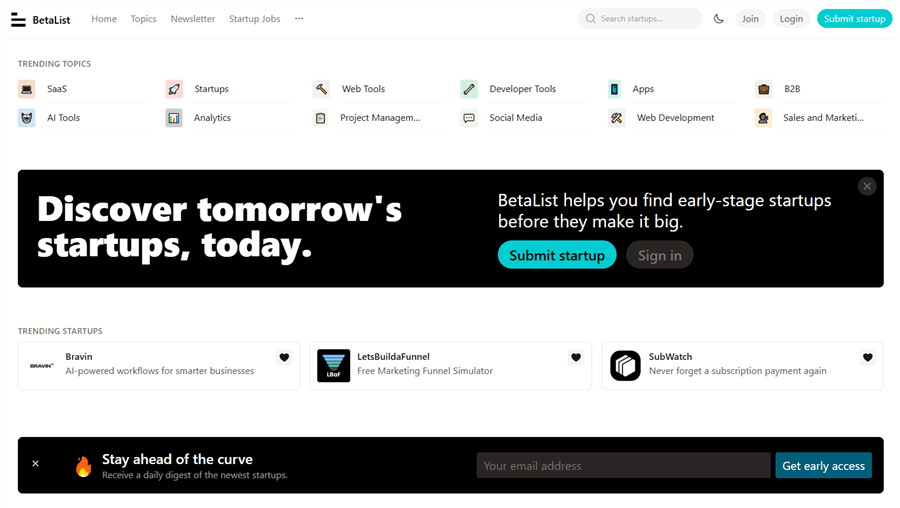
BetaList is one of the oldest pre-launch directories and still attracts a community of early adopters who like trying unfinished products. Many SaaS founders use BetaList 2–3 weeks before a major PH or public launch to validate messaging and gather early signups.
Strengths
- Strong early adopter audience
- Accepts “coming soon” pages
- Sends some products in its newsletter
- Great for collecting waitlist emails
Weaknesses
- Paid submissions ($129–$399) can be pricey
- Approval times vary
- Traffic has declined from its peak years, but remains targeted
Founder insight: Multiple SaaS founders on Reddit mention that BetaList brings quality but not massive volume. Expect 20–150 signups, depending on your niche and visuals.
Tips: Include a short demo, clearly show the problem your SaaS solves, and offer an incentive like early access or a discount.
2. Indie Hackers — Best for Community, Transparency & Feedback
Indie Hackers isn’t a launch directory — it’s a community for builders. But thousands of SaaS products have grown real traction by “building in public” here.

Strengths
- Highly engaged builder community
- Feedback-friendly environment
- Progress Journal and Milestones provide ongoing visibility
- No pressure for a “perfect launch”
Weaknesses
- Not ideal for massive traffic spikes
- Discovery depends on consistent posting
- No upvote-based ranking
Real founder insight
Founders repeatedly say: “IH doesn’t give you traffic; it gives you relationships.” This platform is best for long-term engagement, not one-day hype.
Tips
- Share honest stories (users dislike “polished marketing posts”)
- Join existing discussions before posting your launch
- Use the “Products” section to document updates
3. Hacker News (Show HN) — Best for Technical SaaS
Hacker News is one of the most powerful free launch platforms on the internet — if your audience is developers. A single front-page feature can bring 10,000–80,000 visitors in 24 hours.

Strengths
- Massive organic reach
- Deep, technically rigorous feedback
- Strong credibility boost for dev tools
- High conversion for GitHub-based products
Weaknesses
- Brutally honest users
- Hard to get visibility — many posts get ignored
- Requires a working product (no fluff accepted)
Founder insight: HN users admire simplicity. A typical successful Show HN title: “Show HN: A tool that generates API docs from your code.”No buzzwords, no marketing copy.
Tips: Provide a working demo with clear documentation, respond promptly to questions, and keep claims honest without exaggeration.
4. AlternativeTo — Best for Long-Term Search Visibility
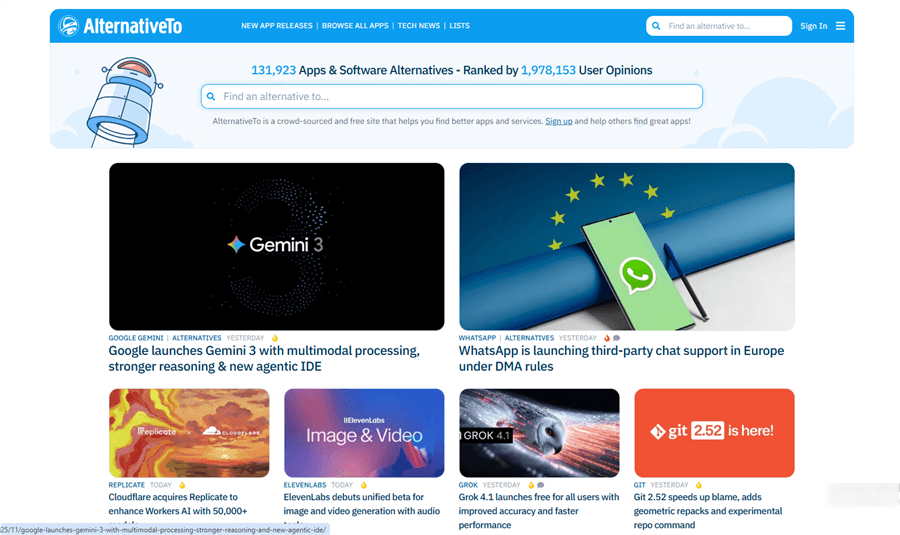
AlternativeTo isn’t a traditional launch site — it’s a comparison directory. The platform ranks extremely well on Google and drives consistent, search-driven traffic over time, making it ideal for SaaS founders looking for long-term discoverability rather than a one-day launch spike.
Strengths
- Evergreen traffic from users actively searching for software alternatives
- Perfect for SaaS competing with big brands (e.g., “Notion alternative,” “Intercom alternative”)
- Strong search engine authority ensures listings stay visible
- User votes improve ranking and discoverability over time
Weaknesses
- Traffic builds slowly; not ideal for immediate launch spikes
- Requires users to actively “like” your tool to improve visibility
- Listings are manually moderated, so approval may take time
Founder insight: Many SaaS founders report steady, long-term growth from AlternativeTo — sometimes 50–200 monthly visitors per listing, even years after publishing. It’s a platform that rewards strategic, evergreen exposure more than hype-driven launches.
Tips: Use real UI screenshots, highlight clear comparisons, and encourage early users to “Like” your tool.
5. Futurepedia — Best for AI SaaS
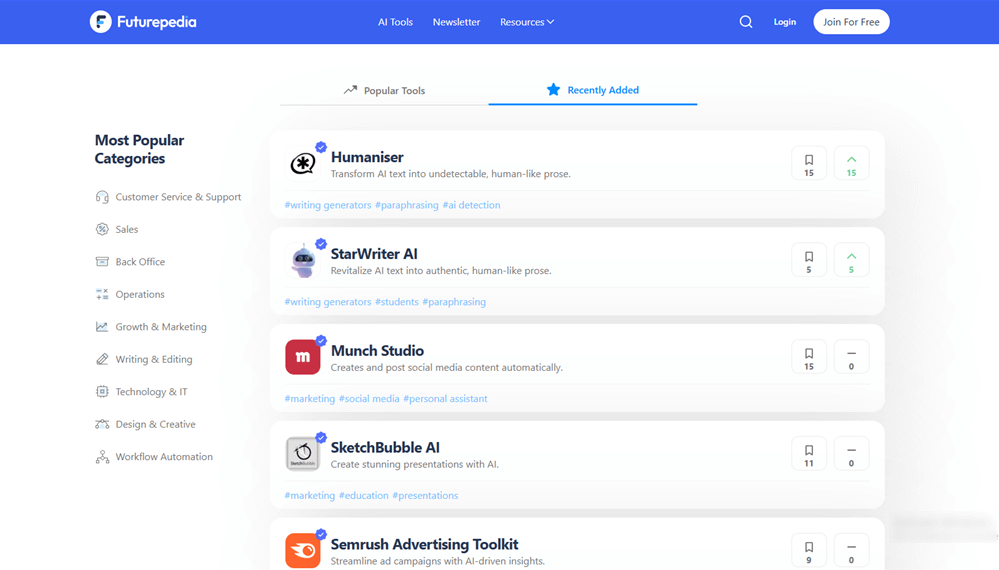
Futurepedia quickly became the largest AI tools directory after the 2023 AI boom. If your SaaS uses AI — even partially — you should list here.
Strengths
- Huge daily traffic from AI-curious users
- Good for niche AI tools (text AI, voice AI, automation, productivity)
- Email newsletter shoutouts possible
- High discoverability for new AI tools
Weaknesses
- Competition has exploded
- Featured placements are paid
- Users sometimes expect “free AI tools”
Founder insight: AI SaaS founders commonly mention that Futurepedia provides spikes of traffic for new listings, but retention depends on the niche.
Tips: Share short demo clips, clearly explain your AI’s value, and use relevant category tags to boost discoverability.
6. Firsto.co — Best Curated Platform for Indie Makers
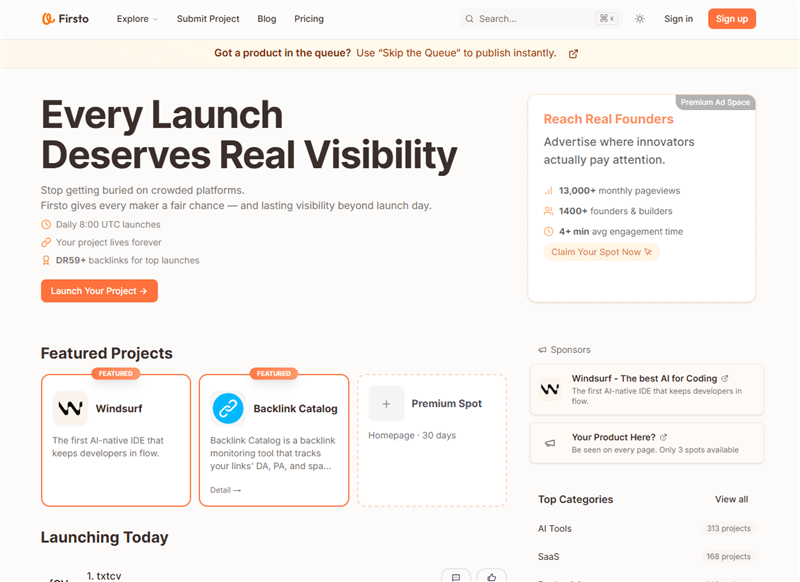
Firsto’s strength is curation. Only select products get featured, and everything feels clean and minimal — a welcome contrast to noisy directories.
Strengths
- Quality over quantity
- Indie-friendly and transparent
- No complex ranking algorithms
- Good for micro-SaaS
Weaknesses
- Smaller audience than PH
- Less predictable traffic
- Founder stories matter more than features
Founder insight: Founders say Firsto feels like “what early Product Hunt felt like.” Many small SaaS tools get more meaningful engagement here than on bigger sites.
Tip: Share your authentic story, use simple visuals, and avoid overselling to build trust with indie audiences.
7. SaaSpa.ge — Best Niche Hub Specifically for SaaS
Saaspa.ge is a directory dedicated 100% to SaaS products. No games, no apps, no Chrome extensions — just SaaS.

Strengths
- Pure SaaS audience
- Simple, clean listings
- Free submissions
- Good for gathering targeted early users
Weaknesses
- Audience size is still growing
- Less community engagement
- Discovery depends on category ranking
Founder insight: Great for getting early B2B visibility. SaaS buyers often browse it for niche solutions — especially productivity, CRM, AI, and dev tools.
Tip: Emphasize pricing and target users, use real screenshots instead of mockups, and link to your blog or changelog to show activity.
8. TinyStartups — Best for Micro-SaaS & Solo Founders
TinyStartups focuses on very small teams, side projects, and indie SaaS creators. It has a cozy builder vibe and gives small tools a chance to shine without being overshadowed.

Strengths
- Indie-first community
- Lightweight submission
- Great match for solo founders
- Useful for accountability and visibility
Weaknesses
- Smaller reach
- Not designed for large-scale launches
Founder insight: TinyStartups is frequently praised for being low-pressure. Makers say they receive “genuine curiosity and constructive comments.”
Tip: Be transparent about your MVP, share your roadmap, and include a clear call-to-action like joining a waitlist or trying a demo.
9. Open-Launch — Best for Community-Driven, Build-in-Public Style Launches
Open-Launch is built for conversational launches, not upvote battles. Products can be followed, commented on, and updated over time.

Strengths
- Thoughtful discussions, not hype
- Encourages multi-update product pages
- Ideal for build-in-public founders
- Less competitive than PH
Weaknesses
- Traffic depends on community engagement
- Smaller audience
- No viral mechanics
Founder insight: Founders enjoy the comment-driven visibility, saying it feels more “human” compared to other launch platforms.
Tip: Request specific feedback, share follow-up updates, and include your story with screenshots.
10. OpenHunts — Best for Evergreen “Always-On” Discovery
OpenHunts positions itself as an “open Product Hunt” that doesn’t bury older listings. It’s built for longevity, not one-day launches.

Strengths
- Evergreen visibility
- Search engine visibility of product pages
- No daily competition
- Good for indie makers and early-stage SaaS
Weaknesses
- Still growing
- Smaller traffic base
- Less hype compared to PH
Founder insight: Some founders report OpenHunts bringing steady drip traffic, especially from search engines and category explorers.
Tip: Optimize your listing like a search-friendly landing page, include relevant keywords, and prompt early users to comment or “hunt” your product.
Poindeo: Boost Your Launch with Visual Product Experiences
Launching your product on platforms like BetaList, Indie Hackers, Futurepedia, or Reddit is only half the battle — how you present your product is just as important as where you list it. This is where Poindeo comes in.
Poindeo helps founders turn their SaaS into a visual experience, transforming static screenshots, PDFs, or basic recordings into dynamic, engaging product demos, walkthroughs, and teaser videos. This means you can showcase your product professionally without hiring a designer or mastering complex video editing.Even on the best alternative platforms, text-heavy posts or static visuals often fail to grab attention. Poindeo allows you to:
- Create polished demo videos showing your product in action, from MVPs to fully featured SaaS.
- Generate animated feature walkthroughs using smart zoom effects, annotations, and built-in narration to highlight key functionality.
- Produce social-friendly teaser clips or landing-page videos that convert visitors into early users.
- Add automatic captions and background music to improve accessibility, retention, and overall production quality.
- Export in multiple aspect ratios (16:9, 9:16, 1:1, 4:3) so the same video works across Product Hunt, social media, and landing pages.
- Iterate quickly in the browser — no downloads, installations, or steep learning curves.
Turning Your SaaS Into a Visual Experience:
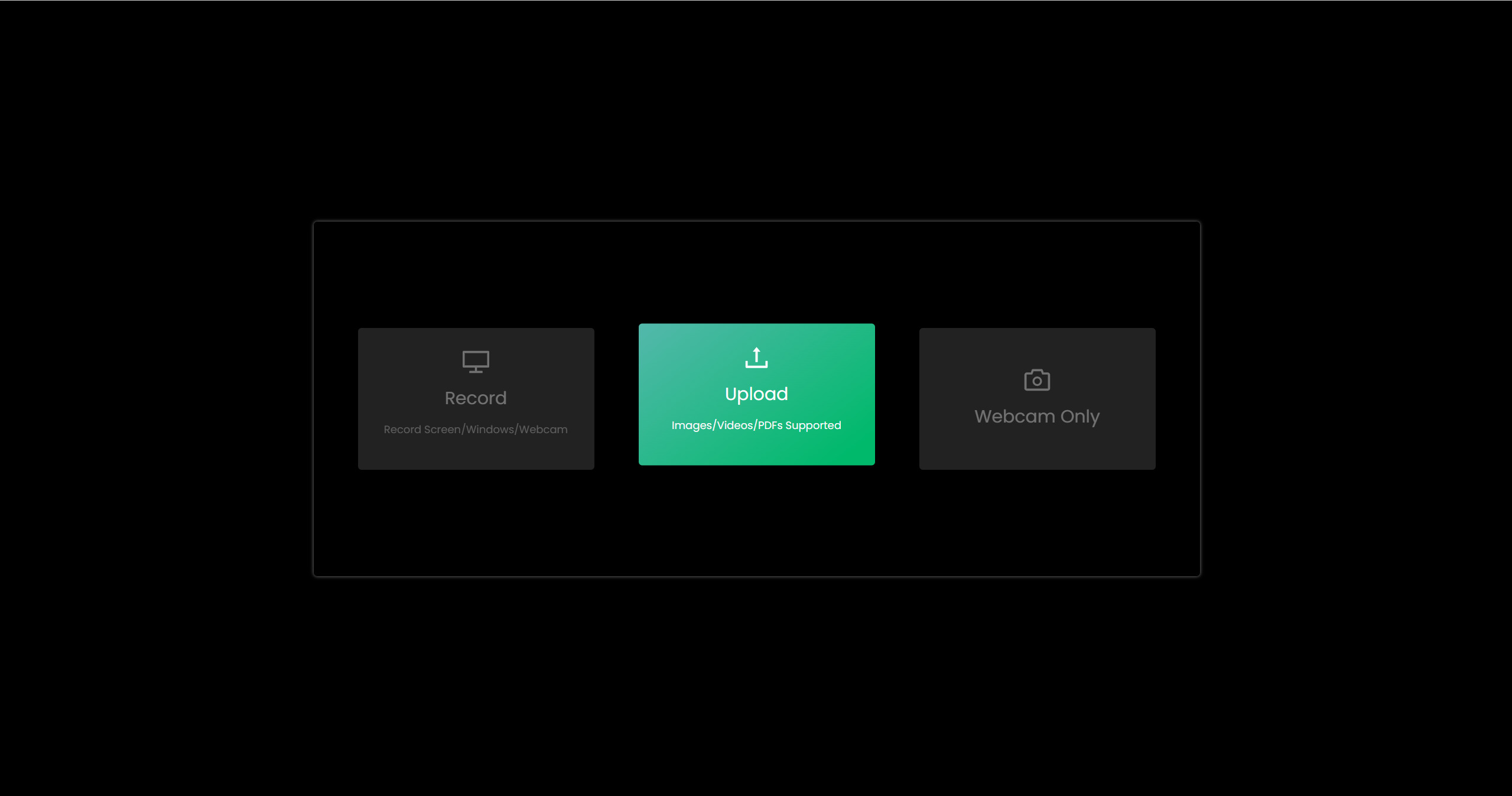
Step 1. Upload screenshots or record your screen: Capture key features, dashboards, or workflows.
Step 2. Add Focused Highlights: Zoom, annotate, or emphasize specific interactions to guide viewers.
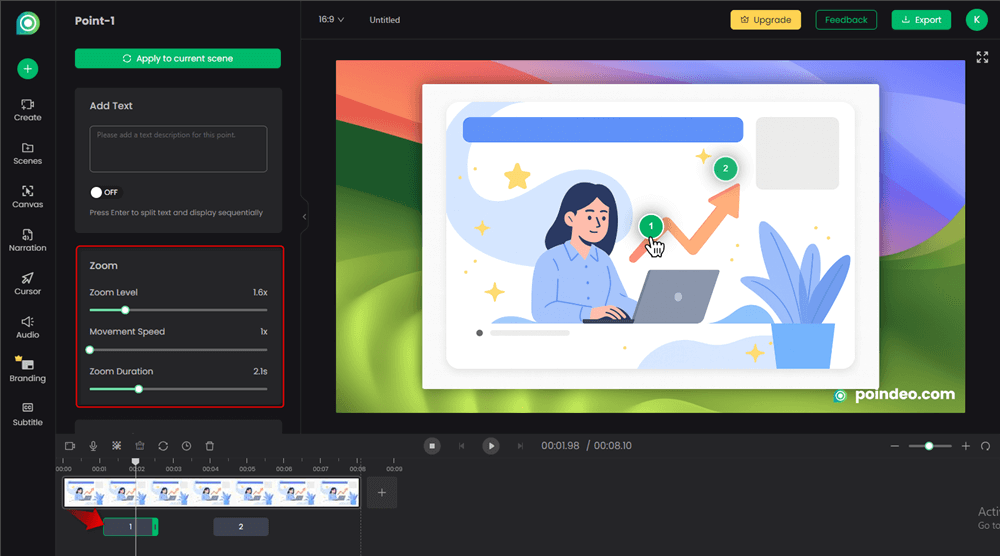
Step 3. Optional Narration & Text Annotations: Explain functionality, benefits, or unique value clearly.
Step 4. Export Launch-Ready Clips: Share across BetaList, Indie Hackers, Reddit, SaaSpa.ge, or even social media to increase engagement and visibility.
BONUS: The Best Reddit Communities for Product Discovery
This is the part most Product Hunt alternative lists completely miss: Reddit is one of the most underrated SaaS launch channels in the world.
Unlike Product Hunt, Reddit gives you: long-form discussions, niche communities, early adopter feedback, honest criticism, and organic visibility.
Here are the best subreddits for SaaS:
- r/SideProject — Best for Indie Builders
r/SideProject is ideal for micro-SaaS projects, MVP updates, and showcasing demos. Users on this subreddit love behind-the-scenes details, making it perfect for validating ideas and sharing progress in a raw, authentic way.
- r/SaaS — Best for B2B Tools
r/SaaS caters to founders building B2B products, including automation, CRM, analytics, and operations tools. It has one of the highest concentrations of actual SaaS founders, providing a highly targeted audience for feedback and early user engagement.
- r/InternetIsBeautiful — Best for Viral Web Apps
If you’ve built a unique or “cool” web app, r/InternetIsBeautiful is a place where your product can gain viral attention. The community appreciates novelty and well-executed web tools, which can lead to quick exposure.
- r/alphaandbetausers — Best for Early Testers
This subreddit is dedicated to MVPs, beta testers, and early access launches. It is one of the few communities specifically designed for product launches, offering valuable feedback from early adopters.
- r/webdev — Best for Developer Tools
r/webdev is perfect for SaaS products aimed at developers, such as APIs, frameworks, dev tools, and monitoring software. The community provides instant, high-quality feedback and can help validate developer-focused products.
- r/startups — Best for Feedback & Storytelling
r/startups thrives on founder stories, lessons learned, “building in public” updates, and requests for feedback. It is also the source of the earlier Reddit discussion asking for Product Hunt alternatives, highlighting its relevance for discovering new launch channels.
- r/Entrepreneur — Best for SMB-Focused SaaS
r/Entrepreneur is suited for SaaS products targeting small businesses, creators, and entrepreneurs. The audience here is more business-oriented than tech-heavy, making it a strong channel for B2B or SMB-focused SaaS launches.
How to Decide Which Platform to Use
Here is a simple decision matrix.
|
Your Goal |
Best Platform(s) |
|
Pre-launch signups |
BetaList, Reddit (r/alphaandbetausers) |
|
MVP validation |
Indie Hackers, r/SideProject |
|
Developer audience |
Hacker News, Reddit (r/webdev) |
|
B2B buyers |
SaaSWorthy, r/SaaS |
|
Viral consumer apps |
InternetIsBeautiful, Product Hunt |
|
Long-term organic search traffic |
AlternativeTo |
|
Monetization (LTD) |
AppSumo, StackSocial |
|
Indie maker audience |
Indie Hackers, Makerlog, ShipFast |
FAQ: Launching Your SaaS Successfully
Can I rely on Product Hunt alone for a successful launch?
No. Product Hunt is useful but crowded and timing-sensitive. Pair it with other platforms, niche communities, and search-driven discovery for better long-term results.
When should I launch my SaaS?
Avoid launching too early. Ensure your product is functional enough to demonstrate real value, even if it’s an MVP.
How should I present my product on launch platforms?
Focus on storytelling and transparency rather than pure promotion. Share your journey, the problem you’re solving, and authentic updates.
How do I maximize the value of launch traffic?
Capture leads with an email list or waitlist. Without it, traffic may disappear once the platform spotlight fades.
Should I focus only on upvotes or likes?
No. While voting helps visibility, real success comes from engagement, testing, and retention — not just numbers.
Final Opinionated Take
Product Hunt isn’t dead, but it’s no longer the launch panacea many founders believe it to be. If you rely solely on PH, you’re placing too much hope on a single moment, and that’s risky, especially for indie or bootstrapped teams.
What really works in 2026 is a multi-platform launch strategy, one that combines indie-friendly directories, highly targeted communities, and search-driven discoverability. Use PH to make splashy announcements — but lean on BetaList, Indie Hackers, Futurepedia, and others to build early traction, get real feedback, and sustain discovery over time.
In short: diversify where you launch so you don’t have to gamble everything on a single platform.